ΑΤALEXANDROS TRAIANOSREPRODUCTIVE MEDICINE
HomeThe Doctor
Services
InfertilityAssisted ReproductionAll servicesFrequently Asked Questions
Fetal MedicineArticlesContact
2310 277 032
GreekGREnglishENShqipALРусскийRUDeutschDEБългарскиBGСрпскиSRARالعربيةARFrançaisFREspañolESItalianoITTürkçeTR
Book an Appointment
ALEXANDROS TRAIANOS
Home
The Doctor
ServicesInfertilityAssisted ReproductionAll servicesFrequently Asked Questions
Fetal Medicine
Articles
Contact

LANGUAGE

GRENALRUDEBGSRARARFRESITTR
2310 277 032Book an Appointment

Type at least two letters — for example “IVF”, “eggs” or “semen analysis”.

↑↓option↵openingescclosing
Dr. Alexandros Traianos, Specialist in Reproductive Medicine and Embryo Medicine

THE NEXT STEP

The first step is a discussion.

At the first appointment, we discuss your medical history and any concerns you may have, so that together we can review the options available.

Book an Appointment →

or call us at 2310 277 032

FREQUENTLY ASKED QUESTIONS

Frequently Asked Questions most frequently.

  • Infertility is defined as the failure to achieve conception after one year (or 6 months in the case of a woman over the age of 35) of normal, regular sexual intercourse. In other words, when a year has passed without the woman becoming pregnant, the couple should consult their treating physician, so that the cause preventing pregnancy can be identified and subsequently addressed. However, we should all be aware and not forget that age is the most critical factor for female fertility, and that an individualized approach to each couple is the "golden key" that solves the problem.

  • Of course not. In approximately one third of cases, infertility is due to the woman (female factor), while in another third of cases it is due to the man (male factor). In the remaining third, it is due to both partners (both the man and the woman) or even to unknown factors.

  • • alcohol • narcotic substances • environmental toxins, including pesticides and lead • smoking • health problems • medications • radiotherapy and chemotherapy • age

  • In general, specialists agree that the fact that a couple has already had a child may be considered evidence that, at least initially, there is no infertility problem. It is like a small test that has been carried out and shows that they “succeeded” at least once. On the other hand, however, we should be aware that circumstances may have changed in the meantime and that a problem may have developed (e.g., the man may have had an inflammation affecting the quality of his sperm, or something may have occurred that affects female fertility: an inflammation, gynecological surgery, an abortion, etc.). In any case, therefore, if a reasonable period of time (one year) passes and a couple is unable to achieve a pregnancy, then, with the help of their doctor, they should investigate whether a problem causing infertility has arisen.

  • Success rates vary at each IVF center. Very important factors also include the woman’s age, her hormone levels, and, of course, her husband’s sperm. In general, rates are around 45% or slightly higher for women up to 35 years of age.

  • The number of treatment cycles a woman may undergo is not fixed. It is certain that in our country there are highly qualified obstetrician-gynecologists and well-organized infertility treatment centers that provide excellent medical services in this field. Provided that the appropriate indications are present (e.g., ovaries that respond to stimulation treatment, a good-quality endometrium, etc.), the success rate—particularly with the use of newer techniques and biotechnological medicines, which demonstrate increased bioactivity compared with conventional urine-derived medicines—reaches a cumulative rate of approximately 65%–70% after 4 treatment cycles.

  • Egg retrieval takes 10–15 minutes, is not painful, is performed under sedation, and after the procedure is completed you can return to your activities.

  • The association between IVF medications and the risk of developing cancer is the greatest concern for women participating in these programs. However, numerous literature references gathered from reliable scientific studies and published in reputable medical journals worldwide are reassuring and do not confirm this concern.

  • At Dr. Traianos' Reproductive Medicine Center, we offer egg and sperm cryopreservation services for individuals who have a personal or medical reason and require this service. We use the most advanced vitrification technique for the freezing of sperm and eggs.

TRAIANOS
DADr. Alexandros TraianosCenter for Reproductive Medicine and Fetal Medicine
  • 2 Patriarchou Ioakeim Street, Thessaloniki
  • 2310 277 032
  • alexandrostraianos@gmail.com

THE CENTER

  • The Doctor
  • Prenatal screening
  • Assisted reproduction
  • Frequently Asked Questions
  • Contact
  • Book an appointment

SERVICES

  • PREIMPLANTATION GENETIC SCREENING (PGS)
  • PREIMPLANTATION GENETIC DIAGNOSIS (PGD)
  • EGG DONATION
  • All services

INFORMATION

  • Alternatives to IVF: What Options Are Available If There Is No Success
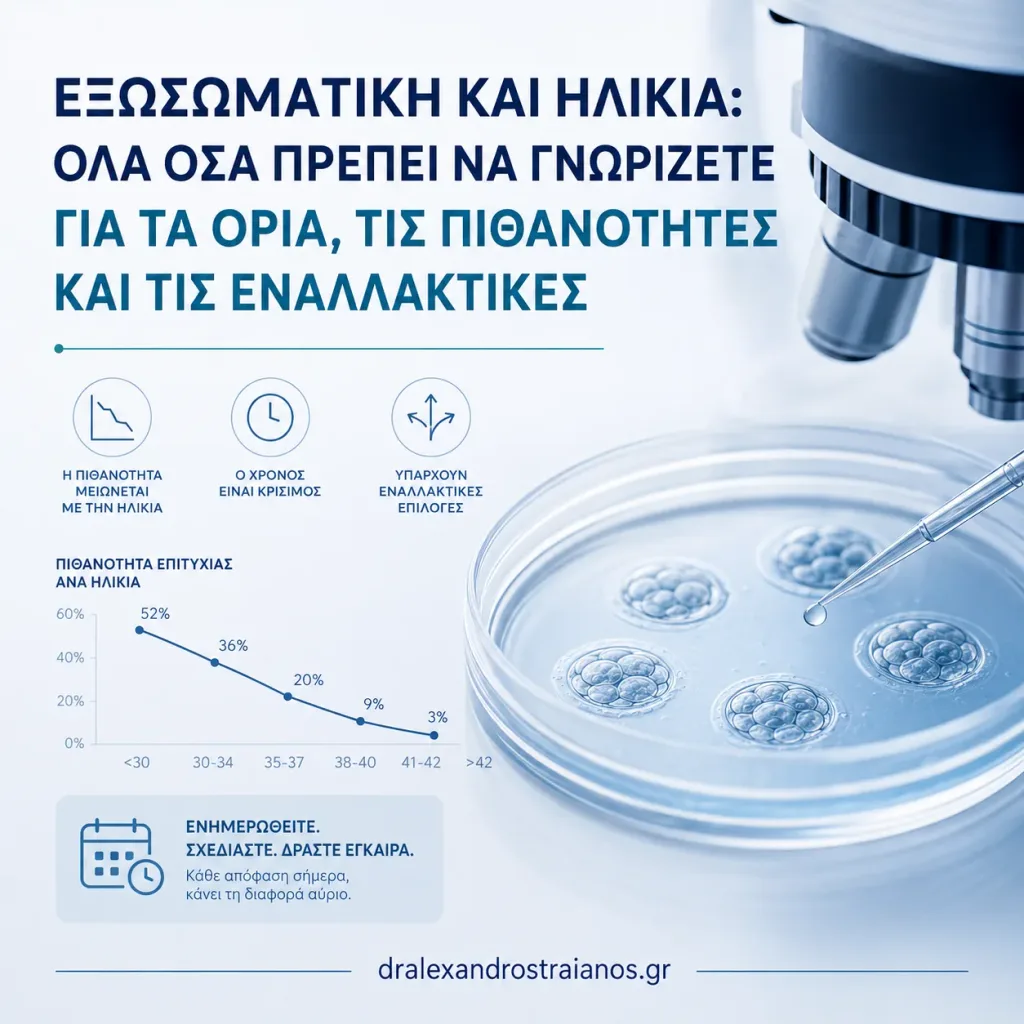
  • IVF and Age: Everything You Need to Know About the Limits, Chances, and Alternatives
  • Giving Birth at 59 with IVF: Exception or New Reality?
  • All articles
  • Personal Data Protection
  • Cookie Policy
  • Data Deletion
  • Terms and Conditions

© 2021–2026 Dr. Alexandros Traianos · Straton Oakland

OUR NEWS

Fertility updates, reproduction and pregnancy

Articles on infertility, assisted reproduction, fertility testing, and cryopreservation.

215 articles in 13 topics
Showing articles 1–12 from 215
When IVF is needed: indications and when to see a specialist
Assisted Reproduction

When Is IVF Recommended? Indications and When to See a Specialist

In vitro fertilization is not always the first option. Learn when it is recommended and when you should consult a specialized gynecologist.

10 November 2026 · 5′ readRead
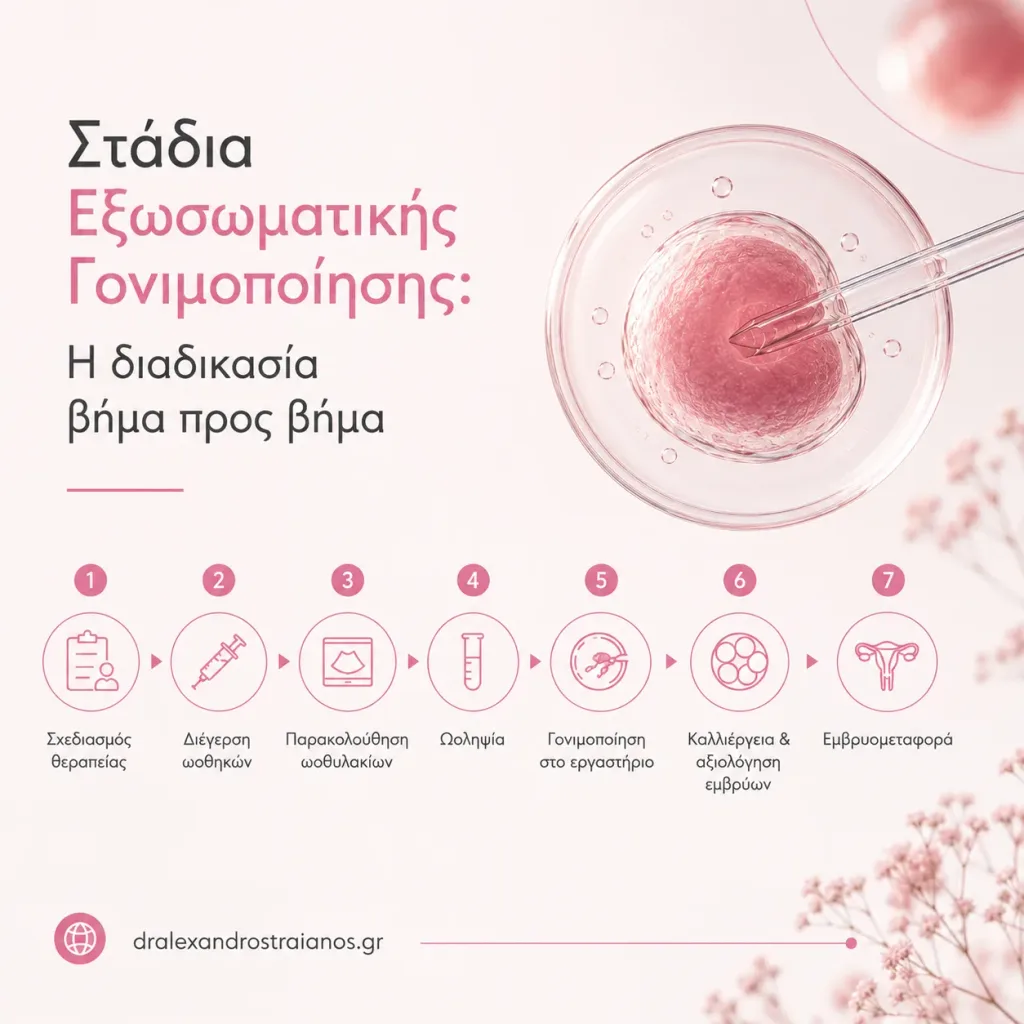
STAGES OF IN VITRO FERTILIZATION: THE PROCESS STEP BY STEP
Assisted Reproduction

STAGES OF IN VITRO FERTILIZATION: THE PROCESS STEP BY STEP

IVF involves a series of carefully planned stages. Discover how the process unfolds and what to expect at each step.

29 October 2026 · 4′ readRead
IN VITRO FERTILIZATION IN THESSALONIKI: THE ENTIRE PROCESS STEP BY STEP
Assisted Reproduction

IN VITRO FERTILIZATION IN THESSALONIKI: THE ENTIRE PROCESS STEP BY STEP

For many people, the desire of a couple to have a child is one of the most important dreams of their lives. For quite a few couples, however, achieving a pregnancy is not

15 October 2026 · 11′ readRead
WHEN IS IT TOO LATE TO HAVE A CHILD? MYTHS AND FACTS ABOUT FERTILITY
IVF and Age

WHEN IS IT TOO LATE TO HAVE A CHILD? MYTHS AND FACTS ABOUT FERTILITY

"When is it too late to have a child?" This is a question that sounds simple, but in reality conceals many myths. Some believe that up to a certain age everything is

15 October 2026 · 4′ readRead
ALTERNATIVES TO IVF: WHAT OPTIONS ARE THERE IF IT DOES NOT SUCCEED
IVF and Age

ALTERNATIVES TO IVF: WHAT OPTIONS ARE THERE IF IT DOES NOT SUCCEED

When an IVF cycle does not lead to the desired result, the next move should not be a mechanical repeat. Find out which alternatives are discussed medically and why a careful reassessment is needed rather than unnecessary add-ons.

5 September 2026 · 4′ readRead
IVF AND AGE: EVERYTHING YOU NEED TO KNOW ABOUT LIMITS, CHANCES AND ALTERNATIVES
IVF and Age

IVF AND AGE: EVERYTHING YOU NEED TO KNOW ABOUT LIMITS, CHANCES AND ALTERNATIVES

The phrase "IVF and age" sums up one of the most important factors affecting the chance of treatment success. Female fertility declines progressively from the age of 30, and more sharply after 35–37, as the number and above all the quality of the eggs decline. This is linked to a lower chance of fertilisation, more aneuploid (chromosomally abnormal) embryos and a higher risk of miscarriage. In men, the effect of age is usually milder, but real. It may be associated with reduced sperm motility and concentration and with increased DNA fragmentation, factors that may affect time to conception and certain reproductive outcomes. Understanding […]

26 August 2026 · 5′ readRead
GIVING BIRTH AT 59 AFTER IVF: AN EXCEPTION OR A NEW REALITY?
IVF and Age

GIVING BIRTH AT 59 AFTER IVF: AN EXCEPTION OR A NEW REALITY?

Stories of women giving birth at ages such as 59 often make the headlines, but they should not become a false yardstick. Find out why such cases are exceptional and what the official data really say.

13 August 2026 · 6′ readRead
IVF AFTER 45: WHEN IT IS POSSIBLE AND WHEN IT IS NOT
IVF and Age

IVF AFTER 45: WHEN IT IS POSSIBLE AND WHEN IT IS NOT

IVF after 45 is not assessed on the basis of wishes alone, but mainly on biological reality and the safety of the pregnancy. Find out when it may make sense and when a much more rigorous medical discussion is needed.

20 July 2026 · 4′ readRead
IVF AFTER 40: CHALLENGES, CHANCES AND REALISTIC EXPECTATIONS
IVF and Age

IVF AFTER 40: CHALLENGES, CHANCES AND REALISTIC EXPECTATIONS

IVF after 40 remains possible, but the prognosis differs significantly from that at younger ages. Find out what the main challenges are, what the data show and how realistic expectations are built.

8 July 2026 · 3′ readRead
UP TO WHAT AGE CAN IVF BE DONE? WHAT APPLIES IN GREECE
IVF and Age

UP TO WHAT AGE CAN IVF BE DONE? WHAT APPLIES IN GREECE

The legal framework in Greece allows medically assisted reproduction up to the woman's 54th year, with special authorisation from 50 to 54. Find out what applies in practice and the medical reasoning behind the age limit.

25 June 2026 · 4′ readRead
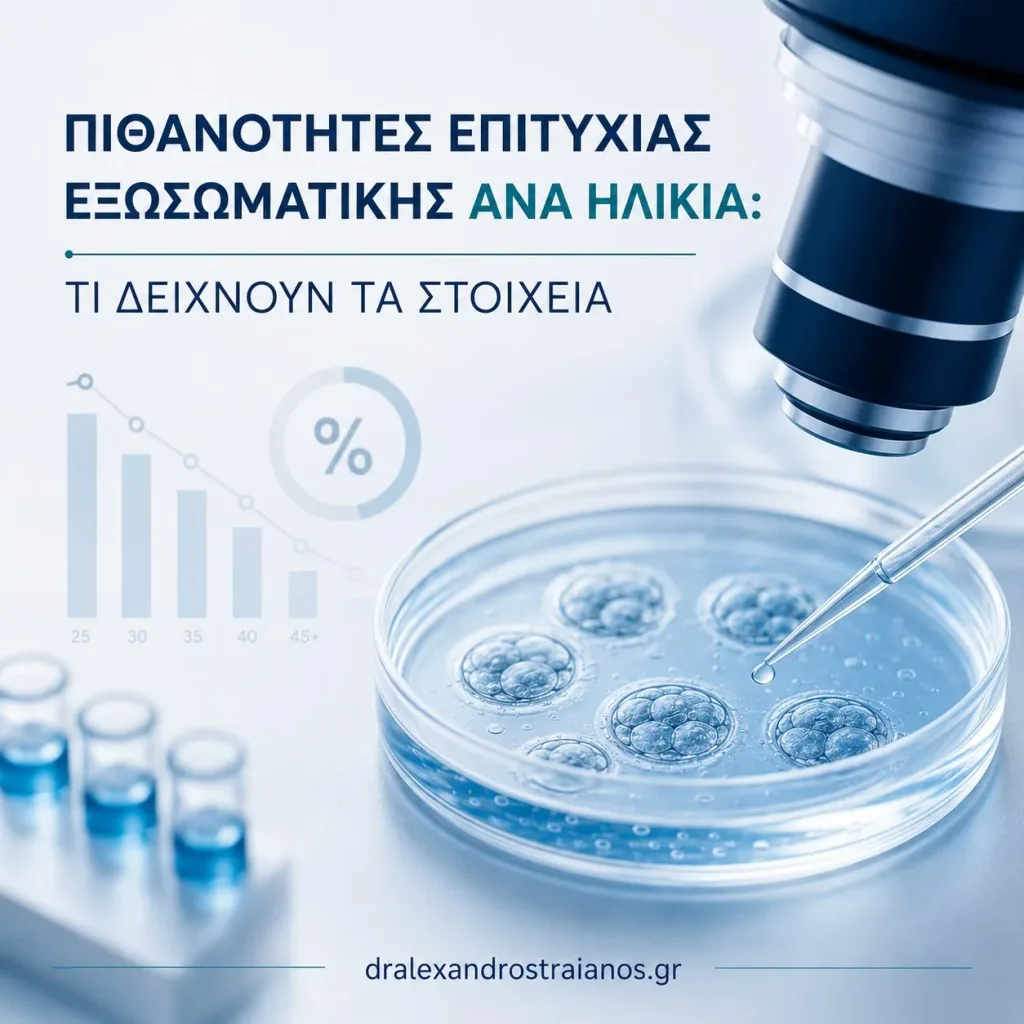
IVF SUCCESS RATES BY AGE: WHAT THE DATA SHOW
IVF and Age

IVF SUCCESS RATES BY AGE: WHAT THE DATA SHOW

Age is one of the most important factors affecting IVF success, especially when a woman's own eggs are used. Find out how the prognosis changes by age group and why the figures need careful interpretation.

12 June 2026 · 4′ readRead
IVF AND AGE: THE COMPLETE GUIDE
IVF and Age

IVF AND AGE: THE COMPLETE GUIDE

IVF and age are two closely connected concepts, as a woman's age has a decisive effect on fertility, egg quality, ovarian response and the chances of achieving a pregnancy. This guide gives a comprehensive picture of how age affects IVF, which tests are needed, what the main stages of the procedure are, which factors affect success and what legal limits apply in Greece. IVF can be an evidence-based option for women and couples who have difficulty conceiving, but it does not have the same success rates at every age. Fertility […]

12 June 2026 · 16′ readRead
1234…18