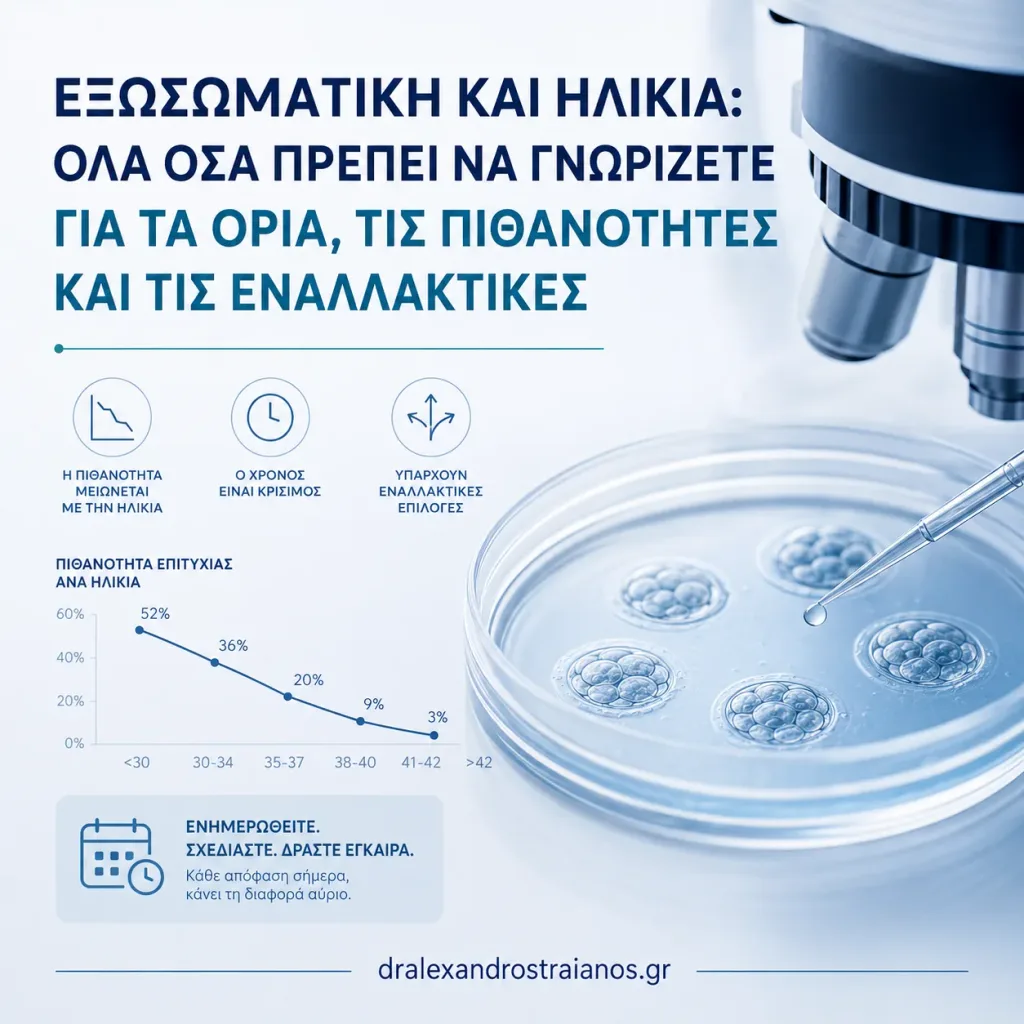
IVF AND AGE: EVERYTHING YOU NEED TO KNOW ABOUT LIMITS, CHANCES AND ALTERNATIVES
CONTENTS
The phrase "IVF and age" sums up one of the most important factors affecting the chance of treatment success. Female fertility declines progressively from the age of 30, and more sharply after 35–37, as the number and, above all, the quality of the eggs decline. This is linked to a lower chance of fertilisation, more aneuploid (chromosomally abnormal) embryos and an increased risk of miscarriage. In men, the effect of age is usually milder, but it is real. It may be associated with reduced sperm motility and concentration and with increased DNA fragmentation, factors that may affect time to conception and certain reproductive outcomes. Understanding each couple's personal fertility window, through objective measurements (AMH, AFC, semen analysis, hormone profile, ultrasound assessment), allows realistic treatment planning and the right timing.
Chances of success by age group
IVF success rates are usually expressed per cycle, per egg retrieval or per embryo transfer, and they vary considerably depending on age, individual history, the stimulation protocol and the quality of the embryology laboratory. The figures below are indicative rates from international registries/guidelines and are no substitute for a personalised medical assessment:
| Age (years) | Estimated success rate per cycle | Comments |
|---|---|---|
| <35 | approx. 30–35% | Better ovarian response |
| 35–37 | approx. 20–25% | Gradual decline in egg quality |
| 38–39 | approx. 15–20% | Increase in embryo aneuploidy |
| 40–42 | approx. 5–12% | Higher risk of miscarriage |
| 43–44 | ~5% or less | Few good-quality eggs |
| ≥45 | <5% (with own eggs) | Alternatives are often considered |
These rates come from national/international data and clinical guidelines, such as the NHS guidance on IVF and age, and may vary between centres and populations. An accurate prognosis requires a medical assessment and a review of any previous cycles.
Limits, safety and procedures in Greece
Beyond the chance of success, age is linked to maternal and fetal safety issues (e.g. gestational hypertension, gestational diabetes, pre-eclampsia, preterm birth). Decisions are always made with informed consent, based on the clinical picture, any coexisting conditions and the legal framework governing medically assisted reproduction in Greece. The process includes clear information on stimulation protocols, the number of embryos to be transferred, cryopreservation and the documentation of medical risks. For reliable, impartial information on treatments, stages and expectations, a useful starting point is the patient information from ESHRE.
Alternatives when age is an obstacle
When the woman's own ovarian reserve or egg quality substantially limits the prognosis, personalised options that increase the chance of a healthy pregnancy are considered:
- Egg donation is associated with higher success rates, especially after the age of 40–43, as eggs of a younger biological age are used.
- Embryo testing with PGT-A in selected cases with multiple failures or miscarriages, with the aim of transferring euploid embryos.
- Tailored protocols (mild stimulation, natural cycle) when quality matters more than quantity or when there is sensitivity to medication.
- Egg/embryo cryopreservation at a younger age to preserve fertility, where this is feasible and appropriate.
- Sperm optimisation/selection (e.g. sperm processing, investigation of DNA fragmentation) when there is also a male factor.
Whether each option is appropriate can only be established after a full assessment, an honest discussion of the couple's goals and a proper evaluation of the time available and the biological reality.
Countries with different age limits for IVF
In some cases, couples choose to consider treatment in countries near Greece, where different legal frameworks apply to assisted reproduction. Countries that are often chosen include:
- Albania
- Cyprus
- Czech Republic
- Spain
- Bulgaria
These countries have well-organised IVF centres and, in some cases, more flexible age limits or different conditions of access to treatment. They may differ on matters such as:
- The upper age limit for IVF
- Access to egg or embryo donation
- Patient selection criteria
- The legal framework and treatment approval procedures
However, the exact limits and conditions differ considerably from country to country and require a personalised assessment.
Important note
Choosing treatment in another country does not cancel out the biological factor of age. The woman's age remains the single most important factor for success, regardless of where IVF is carried out. A decision to have treatment abroad should always be made on the advice of a specialist doctor and after being fully informed.
What can improve the outlook before IVF
Certain interventions can support better outcomes before and during treatment, regardless of age. Targeted lifestyle changes and optimising health before conception include:
- Reaching and maintaining a healthy weight (BMI within the normal range) through a Mediterranean diet and regular exercise.
- Stopping smoking and limiting alcohol, which are associated with better egg/sperm quality and improved implantation rates.
- Checking and controlling underlying conditions (thyroid disorders, diabetes, hypertension), as well as reviewing medication.
- Optimal folic acid intake for women before conception, and personalised supplementation only under medical guidance.
- In men: addressing factors such as heat stress, chronic stress and poor sleep, and an adequate abstinence interval before semen collection.
Starting treatment at the right time, setting realistic expectations and choosing an evidence-based protocol often make the biggest difference to the final outcome.
Personalised assessment in Thessaloniki: next steps
The right start includes a detailed medical history, laboratory and ultrasound tests, and a discussion of cycle strategy and alternatives. The first steps for couples and men seeking solutions to infertility in Thessaloniki include: assessment of ovarian reserve (AMH/AFC), semen analysis with possible investigation of DNA fragmentation, hysterosalpingography where needed, and treatment planning with a clear timeline.
Dr. Alexandros Traianos, Obstetrician-Gynaecologist specialising in reproductive medicine, provides in-depth guidance on age, chances and options, with access to modern laboratory and clinical support methods. The practice is in the city centre, at 2 Patriarchou Ioakeim, 546 22 Thessaloniki, with easy access from central Thessaloniki, Kalamaria, Pylaia, Thermi and neighbouring municipalities. Appointments are arranged on request, so that a clear plan of action can be set and every available alternative can be discussed in line with your personal goals for having children.

He supports scientific excellence in clinical practice and recognizes the possibilities offered by modern reproductive methods to couples who wish to have a child of their own.
His profileThe content of this article is for information only and does not replace a medical examination and advice.