PREPARING FOR EGG CRYOPRESERVATION IN THESSALONIKI: TESTS AND STEPS BEFORE THE PROCEDURE
CONTENTS
Proper preparation is the foundation of safe and successful egg cryopreservation. In Thessaloniki, the procedure is organised according to modern medical protocols and tailored to each woman's profile, so as to maximise the chances of preserving healthy eggs for future use.
WHY PREPARATION IS KEY
Preparation allows for:
- an accurate fertility assessment
- proper planning of the medication protocol
- minimising risks
- better egg quality
INITIAL MEDICAL ASSESSMENT
The first step involves taking a detailed history and a clinical assessment:
- age and menstrual cycle
- previous conditions or surgery
- current medication
- family history of fertility
KEY TESTS BEFORE THE PROCEDURE
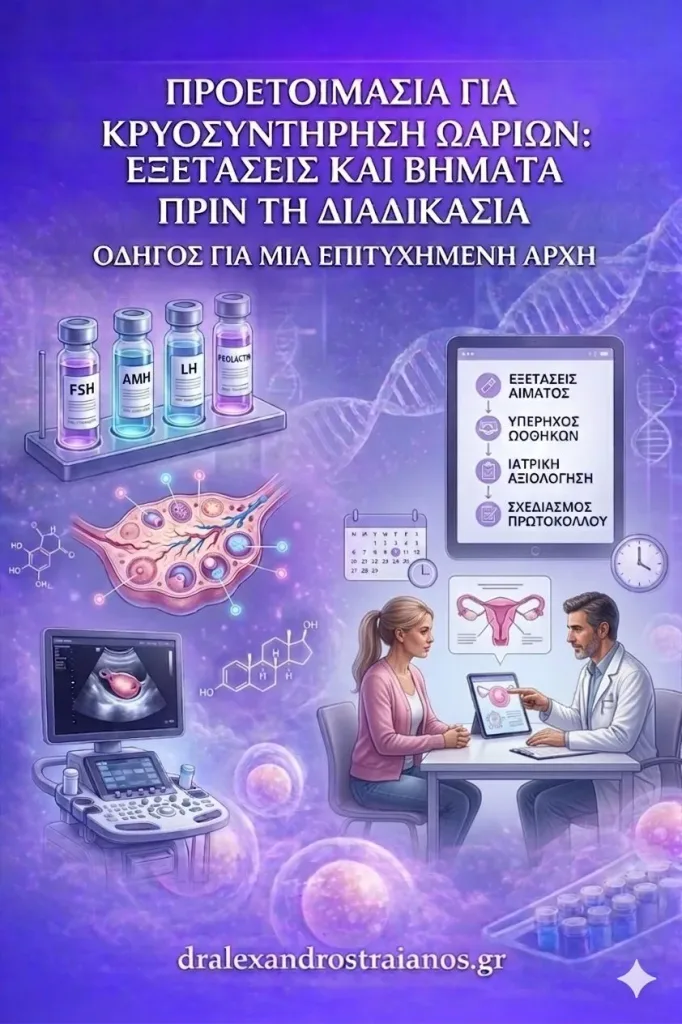
The most common tests include:
- hormone tests (AMH, FSH, LH, oestradiol)
- ovarian ultrasound
- full blood count and biochemistry
- infection screening
The tests help determine the most suitable treatment strategy.
PLANNING OVARIAN STIMULATION
Based on the results:
- a personalised hormonal stimulation regimen is chosen
- the length of treatment is set
- follow-up checks are scheduled
Monitoring is close, for safety and the best possible outcome.
PRACTICAL STEPS BEFORE YOU START
We recommend:
- staying well hydrated
- a balanced diet
- avoiding smoking and alcohol
- managing stress
General health has a direct effect on egg quality.
INFORMATION AND CONSENT
Before the procedure begins:
- you are fully informed about the stages and risks
- a consent form is signed
- expectations and timelines are discussed
CONCLUSION
Proper preparation for egg cryopreservation in Thessaloniki is a key factor in success and safety. Through personalised tests and well-organised steps, every woman can move forward with confidence in preserving her fertility. Preparation and monitoring are carried out with scientific precision at the Centre for Reproductive Medicine and Fetal Medicine under the guidance of Dr. Alexandros Traianos, ensuring a high standard of care and support.

He supports scientific excellence in clinical practice and recognizes the possibilities offered by modern reproductive methods to couples who wish to have a child of their own.
His profileThe content of this article is for information only and does not replace a medical examination and advice.