FREEZING EGGS
About the egg freezing method
Embryo freezing is a procedure that has long been used in fertility treatments and a laboratory technique that has been studied extensively. Egg freezing is a more complex procedure than embryo freezing, because the egg is large and the unique genetic information it contains is more fragile than that of an embryo. Thanks to extensive development work on freezing methods, in vitro fertilisation treatments with frozen eggs are now offered routinely.
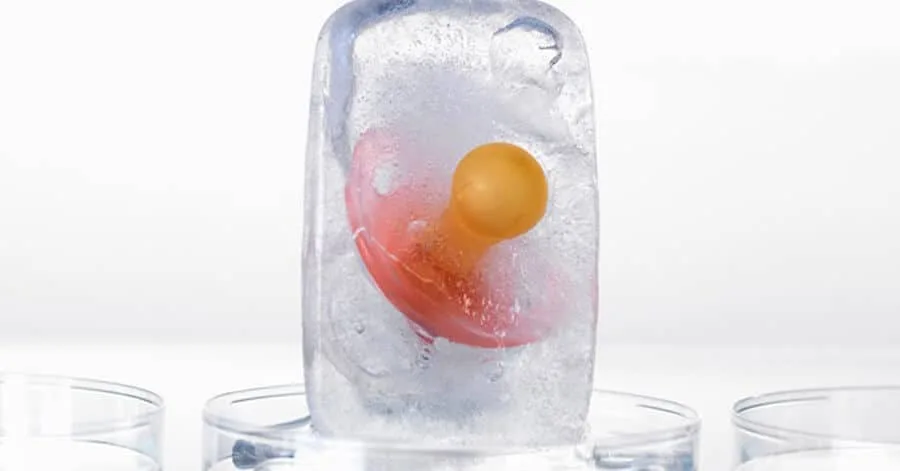
Egg freezing is not "rocket science", but it does require dedicated effort from the fertility treatment laboratory and continuous updating of skills to ensure a high standard of treatment results. The freezing method used is called vitrification. It involves using protective agents to prevent the formation of ice crystals, which are harmful to cells, and freezing the eggs extremely rapidly in liquid nitrogen at a temperature of -196 °C. The eggs are then stored at this temperature in a state of suspended metabolism. The length of the storage period does not affect the final outcome of treatment.
Egg freezing – how is it done?
Egg freezing requires about two weeks of hormone treatment followed by egg retrieval, just like in vitro fertilisation. The first step is for a doctor to examine the ovarian function of the woman and her ovarian reserve. Dr. Alexandros Traianos will also explain in detail the various stages involved in egg freezing.
What happens when a woman wants to use her frozen eggs?
The woman will meet Dr. Alexandros Traianos together with her partner. The frozen eggs will be thawed and fertilised with the partner's sperm. If fertilisation and embryo development are successful, the embryo is transferred to the uterus within 2-5 days of fertilisation. In individual cases, women can also use their frozen eggs with donor sperm from a sperm bank. The embryo can be transferred during a natural menstrual cycle if the woman's cycle functions well, but usually hormone treatment is needed to prepare the uterus for pregnancy. As with in vitro fertilisation, any extra good-quality embryos can be frozen for future use.
What are my chances of becoming pregnant?
The biggest factors in the success of this treatment are the woman's age and how well her ovaries are functioning at the time of freezing. In clinics where egg freezing is established practice, the results are comparable to those of in vitro fertilisation treatments.
The "Dr. Alexandros Traianos" Centre for Reproductive Medicine and Fetal Medicine has carried out a number of fertility treatments using egg cryopreservation since the summer of 2015. Based on the treatments performed, the treatment results are estimated to be similar to those of equivalent treatments using fresh eggs. Of course, it is important to remember that we cannot guarantee a pregnancy or a birth with certainty, even with egg cryopreservation.
What should I do next if I want to find out more about egg freezing?
Please do not hesitate to contact us at the "Dr. Alexandros Traianos" Centre for Reproductive Medicine and Fetal Medicine and book an appointment. If you are interested in egg freezing or have questions about fertility, you can visit us at our premises at 2 Patriarchou Ioakeim in the centre of Thessaloniki or call us on (+30) 2310 277 032 032
*The content of this blog is not intended to replace professional medical advice, diagnosis or treatment. Always seek the advice of qualified healthcare providers with any questions you may have about a medical condition.

He supports scientific excellence in clinical practice and recognizes the possibilities offered by modern reproductive methods to couples who wish to have a child of their own.
His profileThe content of this article is for information only and does not replace a medical examination and advice.
