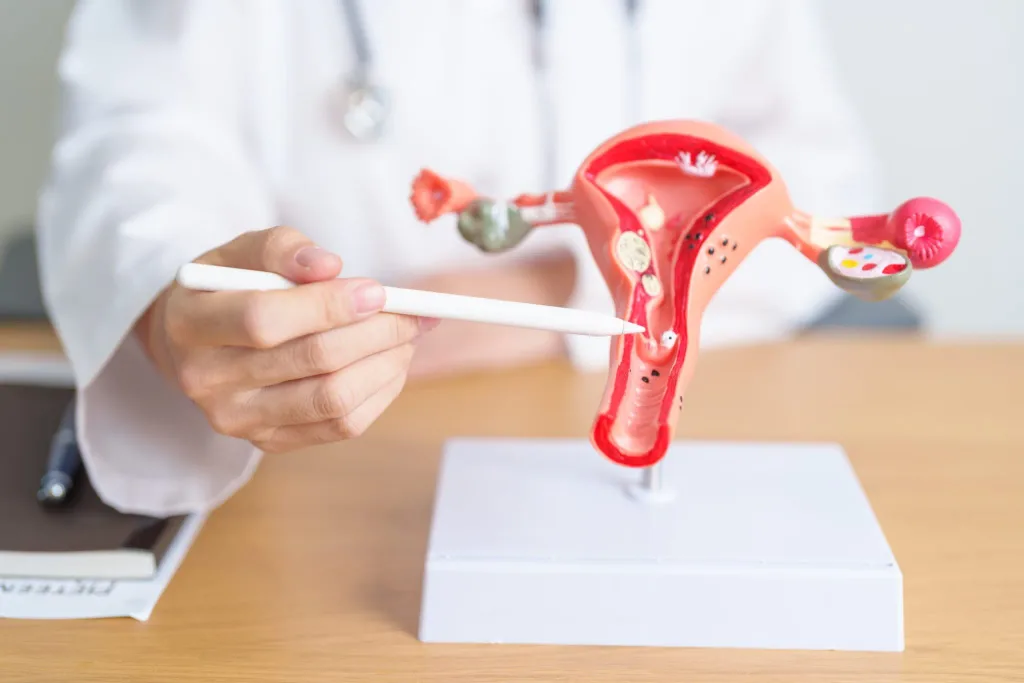
FIBROMAS AND THEIR IMPACT ON FERTILITY
CONTENTS
Fibroids are benign tumours that grow in the uterus and affect many women during their reproductive years. Although they are not always harmful, in some cases they can affect fertility and the success of a pregnancy. In this article, we look at the impact of fibroids on fertility, as well as the treatments available for women who are trying to conceive.
What are fibroids?
Uterine fibroids are firm, non-cancerous growths that form from the smooth muscle of the uterus. They may develop inside the uterus, within its wall or on its outer surface. They vary in size, from very small to quite large, and may be single or multiple.
How do fibroids affect fertility?
The effect of fibroids on fertility depends on their size, location and number. In many cases, women with small fibroids have no problems at all when trying to conceive. In other cases, however, fibroids can make it harder to conceive for the following reasons: - Interfering with implantation: If fibroids are located inside the uterus (submucosal fibroids), they can affect the implantation of the fertilised egg. - Blocking the fallopian tubes: Fibroids located near the fallopian tubes can block them, preventing sperm from reaching the egg or the fertilised egg from reaching the uterus. - Changes in the shape of the uterus: Large or multiple fibroids can change the shape of the uterus, making pregnancy more difficult.
Fibroids and IVF
For women trying to conceive through in vitro fertilisation (IVF), the presence of large or multiple fibroids can reduce the chances of success. Doctors often recommend removing fibroids before starting an IVF cycle to improve the chances of implantation and a successful pregnancy.
Symptoms of fibroids
Although fibroids can be asymptomatic, many women have the following symptoms: - Heavy or prolonged periods - Pain or pressure in the pelvic area - Frequent urination - Constipation - Difficulty conceiving If you have any of these symptoms, it is advisable to see your gynaecologist for further assessment.
Diagnosing fibroids
Fibroids are diagnosed by ultrasound or magnetic resonance imaging (MRI), which allow the doctor to determine the location, size and number of the fibroids.
Treatment options
Depending on the size and location of the fibroids, there are several treatment options:
- Medication: Hormonal treatments can help shrink fibroids, but they do not eliminate them completely.
- Myomectomy: Surgical removal of the fibroids, usually recommended for women who want to preserve their fertility.
- Uterine fibroid embolisation: A procedure that cuts off the blood supply to the fibroids, causing them to shrink.
- Hysterectomy: Some women choose removal of the uterus (hysterectomy) as a definitive solution, especially if they do not wish to preserve their fertility.
Tips for women trying to conceive
If you have been diagnosed with fibroids and are trying to conceive, here are some tips: - Regular check-ups: See your gynaecologist for regular check-ups and monitoring of your fibroids. - Talk to a fertility specialist: Discuss your treatment options with a reproductive medicine specialist to decide on the best strategy. - Avoid delay: In some cases, fibroids can grow over time, so it is important to act promptly.
Conclusion
Fibroids can affect fertility in some cases, but there are many treatment options that can help women achieve a pregnancy. If you have been diagnosed with fibroids and are trying to conceive, an accurate diagnosis and treatment by a reproductive medicine specialist are crucial.

He supports scientific excellence in clinical practice and recognizes the possibilities offered by modern reproductive methods to couples who wish to have a child of their own.
His profileThe content of this article is for information only and does not replace a medical examination and advice.