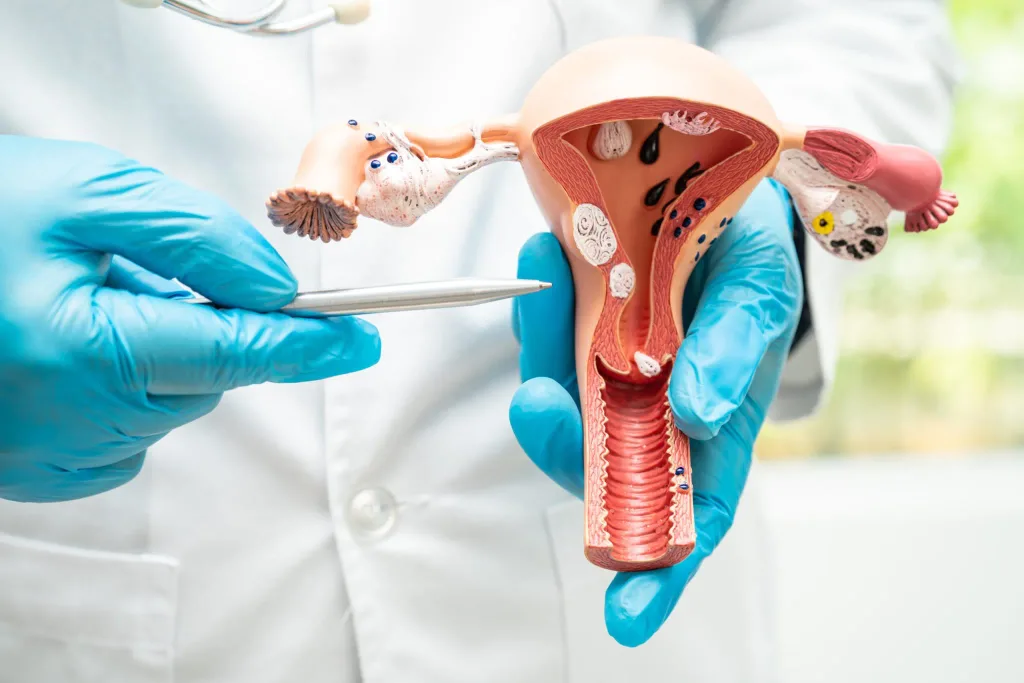
HYDROSALPINGA: WHAT IS IT AND HOW DOES IT AFFECT FERTILITY?
CONTENTS
- What is a hydrosalpinx?
- What causes a hydrosalpinx?
- What are the symptoms of a hydrosalpinx?
- Which methods are used to diagnose a hydrosalpinx?
- How does a hydrosalpinx affect fertility?
- But there are two fallopian tubes, so there should not be a problem, right?
- If my fertility specialist diagnoses a hydrosalpinx, will IVF allow me to have a normal pregnancy?
- Treating a hydrosalpinx
- How can I find out more about diagnosing and treating a hydrosalpinx?
What is a hydrosalpinx?
The term hydrosalpinx describes a clinical condition in which fluid collects inside one or both fallopian tubes because the abdominal opening of the tube (the fimbrial end) is blocked. The word comes from the Greek «hydro» (water) and «salpinx» (tube, specifically the fallopian tube). The condition may affect just one tube or both. The affected tube can often enlarge, reaching a size of several centimetres.
What causes a hydrosalpinx?
There may be more than one cause of a hydrosalpinx, but the most common is a previous pelvic infection, most often chlamydia or gonorrhoea. Previous pelvic surgery, adhesions, endometriosis and certain tumours can also cause a hydrosalpinx.
What are the symptoms of a hydrosalpinx?
In many cases, a hydrosalpinx causes no symptoms. When symptoms do occur, however, the main complaint is pelvic pain, pain during intercourse and/or fever. Infertility is often a symptom in its own right and is the clue that leads to the diagnosis of a hydrosalpinx.
Which methods are used to diagnose a hydrosalpinx?
The most useful method for diagnosing a hydrosalpinx is HSG (hysterosalpingography). HSG is a type of fluoroscopy (an X-ray performed using a contrast medium). HSG is good at assessing tubal patency (free flow through the tubes), because the fertility specialist performing the procedure can watch the contrast dye moving through the tubes. If this flow is blocked, it will be clearly visible. Ultrasound can be used to confirm the diagnosis and rule out a false-positive HSG result.
How does a hydrosalpinx affect fertility?
The ability to conceive with a hydrosalpinx varies with the severity of the blockage as well as the choice of treatment. Without treatment, pregnancy is possible, but the chances of complications such as miscarriage are higher. With treatment, the outlook is much better, especially with IVF. A hydrosalpinx can also have a negative effect on fertility treatment. According to the National Institutes of Health, when hydrosalpinx fluid is present in a woman undergoing assisted reproductive technologies such as IVF, it halves the success of these treatments compared with women who do not have a hydrosalpinx.
But there are two fallopian tubes, so there should not be a problem, right?
The very presence of a hydrosalpinx can have a negative effect on fertility. Bilateral hydrosalpinx (where both tubes are blocked) is also quite common.
If my fertility specialist diagnoses a hydrosalpinx, will IVF allow me to have a normal pregnancy?
When someone undergoes in vitro fertilisation (IVF), doctors retrieve an egg and fertilise it in the laboratory. They then need to transfer the embryo back into the uterus. A hydrosalpinx can affect the success of this transfer. Removing the tube before an embryo is transferred can improve IVF success rates. For this reason, doctors often recommend completing surgery before you undergo IVF treatment. In addition, the blockage caused by the fluid can lead to an ectopic pregnancy, which occurs when a fertilised egg becomes stuck in the fallopian tube and begins to develop into an embryo. This type of pregnancy cannot safely continue, as it will result in the loss of the embryo. Without treatment, it can also be fatal for the pregnant woman.
Treating a hydrosalpinx
Treatment for a hydrosalpinx varies with the severity of the blockage. A doctor may recommend laparoscopic surgery to remove scar tissue or other adhesions that could affect fertility. Another type of surgery, known as salpingectomy, involves removing all or part of the affected tube. Laparoscopic salpingectomy is performed under general anaesthesia, and the operation usually takes less than an hour. You should allow a recovery time of about three weeks. Removing a hydrosalpinx often dramatically increases IVF success rates. This procedure can help restore fertility.. If the cause is endometriosis, doctors can remove the endometriotic growths. Where pelvic inflammatory disease (PID) is the cause, a doctor may prescribe a course of antibiotics to treat any remaining infection.
Another possible treatment is sclerotherapy, which uses an ultrasound-guided needle to draw the fluid out of the affected tube. Doctors then inject a special chemical called a sclerosing agent, which should stop the fluid from building up again.
How can I find out more about diagnosing and treating a hydrosalpinx?
Book a consultation! Contact the “Dr. Alexandros Traianos” Reproductive Medicine Centre today and together we will help you find the answers you are looking for. For information, call ☎️(+30) 2310 277 032 or send a message to 📧email alexandrostraianos@gmail.com.

He supports scientific excellence in clinical practice and recognizes the possibilities offered by modern reproductive methods to couples who wish to have a child of their own.
His profileThe content of this article is for information only and does not replace a medical examination and advice.