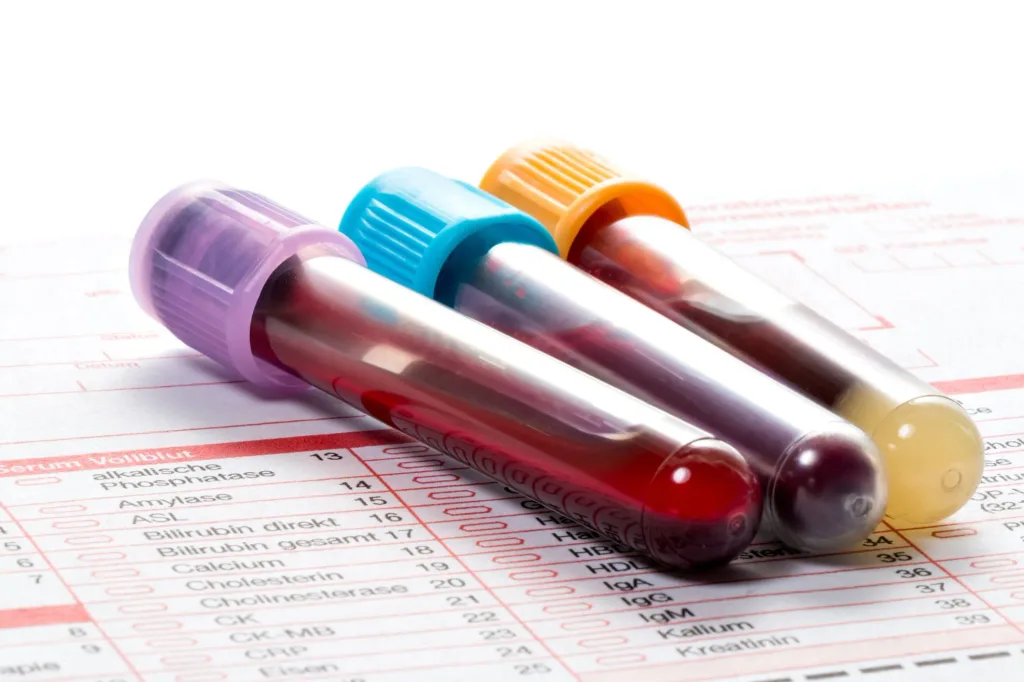
HORMONAL CHECK
Book an appointment
Discuss your case with the physician and find out what the next steps are.
- FSH increases with age as well as in women with few eggs in the ovaries
- LH may be elevated in Polycystic Ovary Syndrome
- Estradiol
- Prolactin: may be elevated in cycle disorders
- Progesterone : for ovulation control on the 21st day of a 28 day cycle
- Thyroid function test and antithyroid antibodies
- AMI (Anti-Miller Hormone):It is an indicator of the number of eggs in the ovaries and predicts the response of the ovaries to their stimulation with hormones in cases of assisted reproduction.
What patients often ask
Hormones regulate almost every stage of the reproductive process: ovulation, egg maturation, preparation of the uterus for implantation, and the maintenance of pregnancy. Even small disturbances in hormone levels can significantly affect fertility. Hormone testing helps:
✅ to detect disorders such as polycystic ovary syndrome (PCOS) ✅ to assess ovarian reserve ✅ to diagnose thyroid or pituitary problems ✅ to design a personalised assisted reproduction plan
Hormonal fertility testing usually involves blood tests in the first days of the cycle (usually day 2 – 5). Some of the main hormones tested are:
FSH (follicle-stimulating hormone) – an indicator of ovarian function LH (luteinising hormone) – linked to ovulation Oestradiol (E2) – shows ovarian activity AMH (anti-Müllerian hormone) – estimates ovarian reserve Prolactin – can affect ovulation Thyroid hormones (TSH, T3, T4) – thyroid disorders affect menstruation and pregnancy Testosterone and androgens – especially in cases of PCOS
In men, hormone tests such as FSH, LH, testosterone and prolactin help to understand the cause of possible oligospermia or azoospermia.
Hormone testing is recommended:
✅ for couples who have been trying for a child for more than 6–12 months without success ✅ for women with irregular or infrequent cycles ✅ before starting assisted reproduction (e.g. IVF) ✅ for women over 35 who want to check their ovarian reserve
Hormones and IVF Accurate hormone testing is essential for successful IVF. It allows the medication used for stimulation to be adjusted correctly, the right protocol to be chosen, and the ovarian response to be predicted.
Prolactin can affect fertility in several ways:
- In women: Raised prolactin can disrupt the menstrual cycle and reduce ovulation. These disturbances can prevent conception or lead to miscarriage.
- In men: Hyperprolactinaemia can cause reduced libido, erectile dysfunction and reduced sperm production, thereby affecting fertility.
Related articles
- Fertility AssessmentTHE IMPORTANCE OF HORMONE CONTROL FOR FERTILITY
- Reproductive MedicineTHE ROLE OF PROLACTIN IN INFERTILITY
- Fertility AssessmentDOES THYRODY FUNCTION AFFECT YOUR FERTILITY?



He supports scientific excellence in clinical practice and recognizes the possibilities offered by modern reproductive methods to couples who wish to have their own child.
His profileThis information is for general guidance only and does not replace a medical examination and advice.