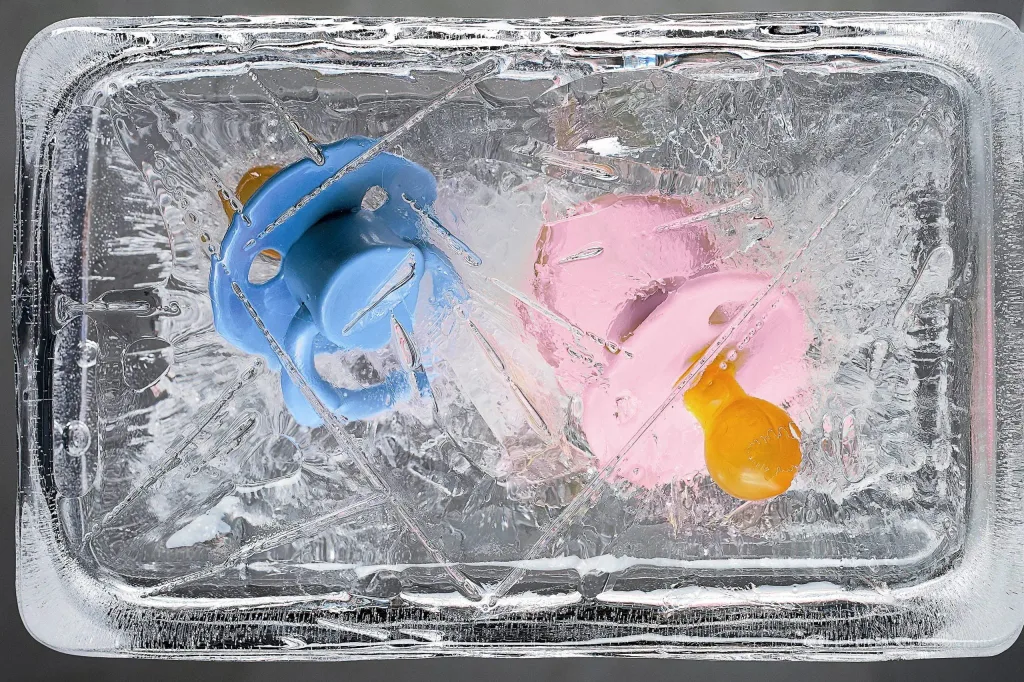
EGG FREEZING - FERTILITY PRESERVATION
Book an appointment
Discuss your case with the physician and find out what the next steps are.
Cryopreservation of egg-laying eggs is a method that has recently begun to be implemented in the field of assisted reproduction and is applied in cases such as:
- Women with early ovarian failure
- Women who are going to undergo oncology treatment and there is an increased risk of losing fertility
- Women who want to maintain their fertility and postpone the birth of a family
- Couples wishing to avoid embryo freezing for ethical or religious reasons
The first pregnancy report from frozen eggs was obtained by Chen in 1986. Since then, few children have been born worldwide because the process of freezing eggs by the freezing method did not have high success rates. The main reason was the difficulty in cryopreservation of cells with high water content, such as eggs.
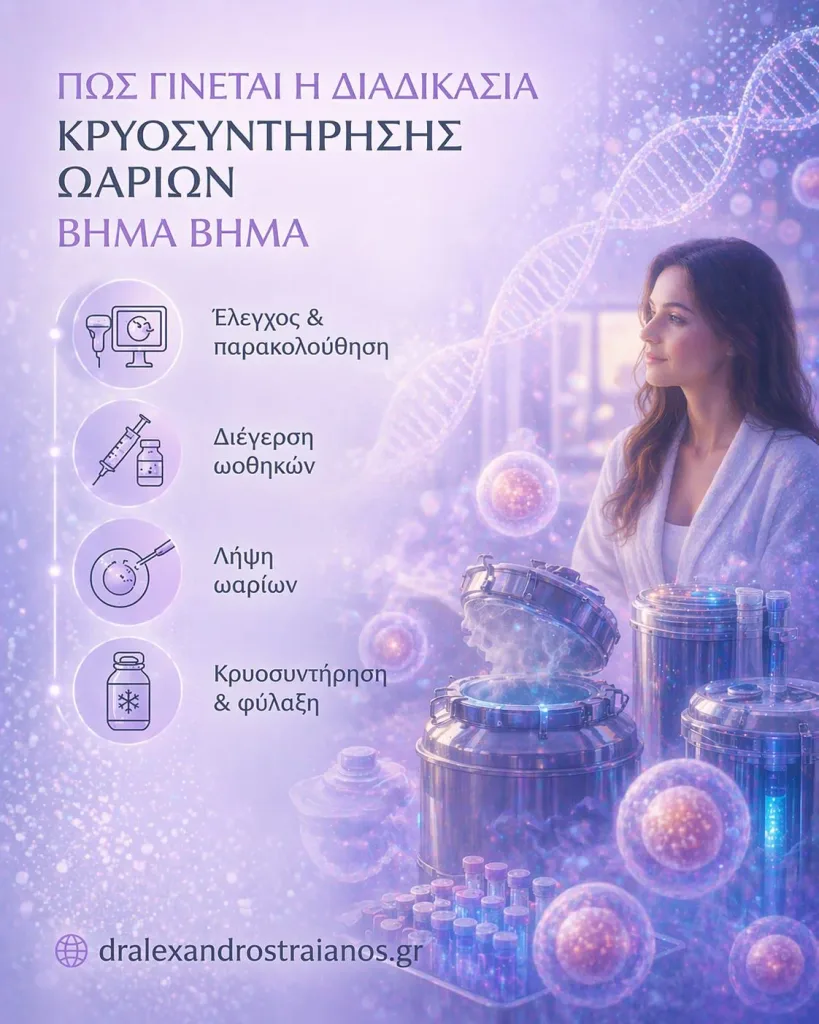
On the contrary, the recently used vitrification method, according to the international literature, seems to be successfully used for cryopreservation of anoxic eggs. The survival rate of eggs after thawing is over 90%, the fertilization rate is about 70% and the pregnancy rate is more than 40%. In order to collect the eggs for cryopreservation, the woman undergoes hormonal ovarian stimulation, as in the case of IVF. The procedure takes approximately 9-12 days during which it is subjected to ultrasound and blood sampling for analysis, at regular intervals. Once the eggs have matured sufficiently, they are removed with a thin needle placed through the vagina under ultrasound guidance. The procedure is not painful, it takes a while and the woman is intoxicated, a form of narcolepsy. The eggs collected are frozen immediately to -196 degrees Celsius and remain stored until the woman thinks it's time to become a mother. "
Cryopreservation of egg-laying eggs is a promising method that touches on the modern living conditions of Greek women and seems to offer much in the field of assisted reproduction.
What patients often ask
From a medical point of view, eggs can remain in cryopreservation:
for decades with no reduction in their quality with no change in their structure
Studies show that eggs thawed after more than 10–15 years had excellent survival and fertilisation rates.
No. At cryopreservation temperatures:
biological time practically stops viability is not affected there is no cellular deterioration
An egg frozen at 30 has the same biological age even after 20 years.
Egg retrieval is performed:
under light sedation or brief anaesthesia in about 15 minutes without a surgical incision
Most women feel no pain during the procedure and wake up without significant discomfort.
Egg freezing does not stop time in the body, but it:
keeps the eggs young bypasses future deterioration provides a fertile reserve for the future
In practice, it "carries" fertility forward to a later age.
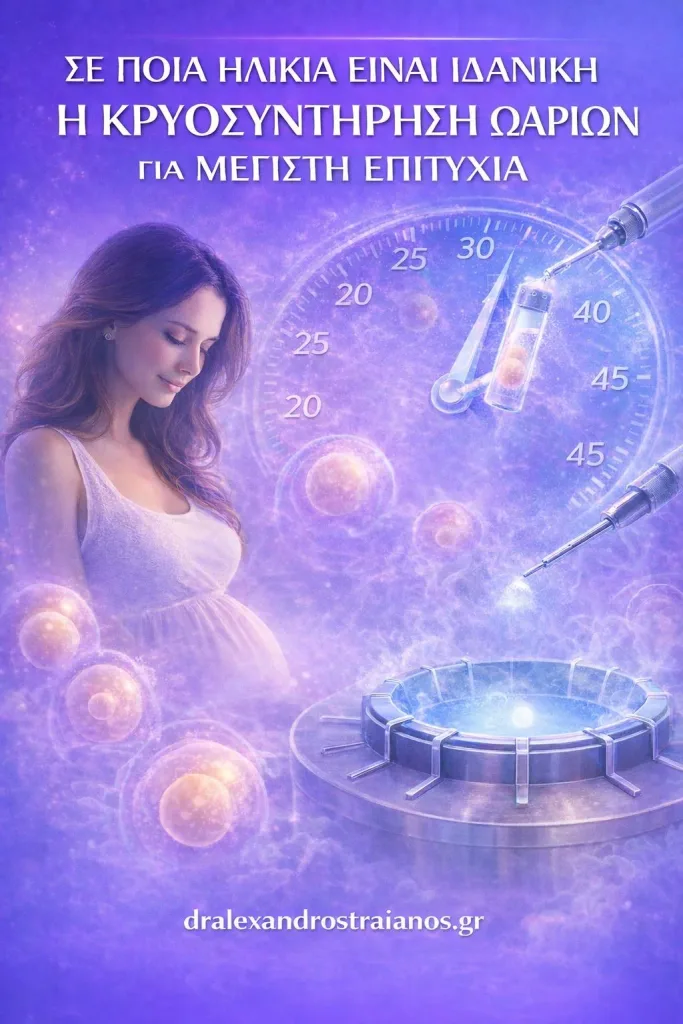
Ideally, it is wise to freeze your eggs early if you want to wait until your mid-30s to early 40s to become a mother. Female fertility declines with age, so most women should freeze eggs in their 20s or early 30s. However, every woman is unique, so fertility tests can provide specific guidance for your situation.
Freezing your eggs now is likely to give you a better chance of having a baby than using fresh eggs in, for example, five years' time. However, if you want to have a baby now, using fresh eggs is better than using frozen eggs.
Related articles
- CryopreservationHOW MANY YEARS CAN EGGS BE KEPT IN CRYOPRESERVATION
- CryopreservationHOW EGG CRYOPRESERVATION IS DONE STEP BY STEP
- CryopreservationAT WHAT AGE IS EGG CRYOPRESERVATION IDEAL FOR THE BEST CHANCE OF SUCCESS


He supports scientific excellence in clinical practice and recognizes the possibilities offered by modern reproductive methods to couples who wish to have their own child.
His profileThis information is for general guidance only and does not replace a medical examination and advice.
